▾ G11 Media Network: | ChannelCity | ImpresaCity | SecurityOpenLab | Italian Channel Awards | Italian Project Awards | Italian Security Awards | ...
InnovationOpenLab

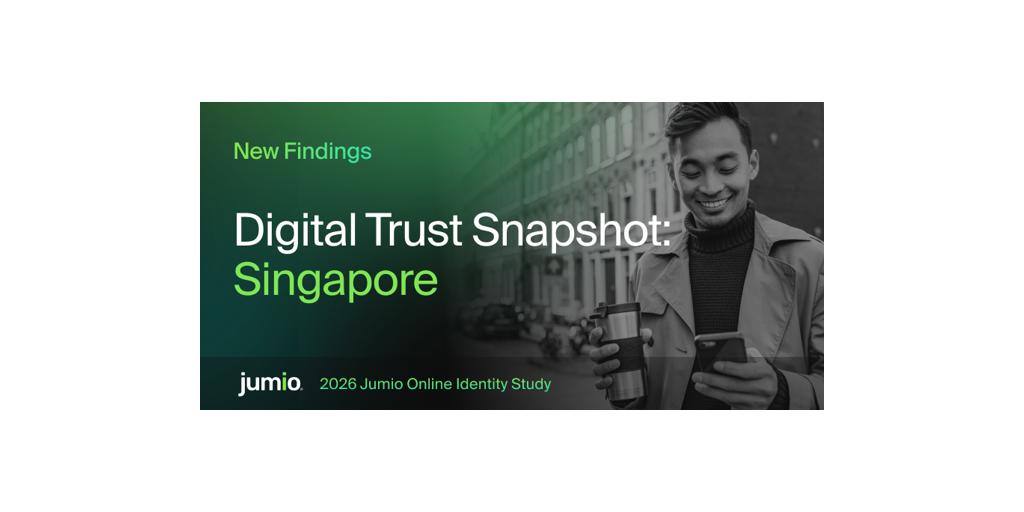
Jumio Trust Snapshot: Who’s Willing to Share Their Identity with Your Business?

Jumio, the leading provider of AI-powered identity intelligence, today released new findings from its 2026 Online Identity Study, revealing a growing divide in consumer trust around the protection of ...
Immagine

As digital platforms navigate varying levels of confidence from consumers in Singapore, Jumio highlights how secure, privacy-conscious identity verification empowers all industries to build lasting trust

  • Jumio’s new findings from its 2026 Online Identity Study reveal a major disconnect between consumers’ willingness to share personal data and their trust in organizations to keep it private and secure.
  • While more than half of consumers in Singapore trust regulated industries like banking and fintech to protect their personal data, less than 10% trust social media, the gig economy, online gaming, and dating apps - presenting a clear opportunity for industry players to build trust through action with rigorous identity security innovation.
  • These findings highlight how trust is earned through identity verification that is privacy-conscious, secure, and convenient.

SINGAPORE: Jumio, the leading provider of AI-powered identity intelligence, today released new findings from its 2026 Online Identity Study, revealing a growing divide in consumer trust around the protection of their personal data, with respondents indicating they are significantly more comfortable sharing information with highly-regulated industries including banks and fintechs than other online platforms.

“Consumers are open to sharing their personal data for verification purposes but they’re becoming more selective about who they trust with that data,” said Joe Kaufmann, global head of privacy and data protection officer at Jumio. “While highly regulated sectors benefit from established data protection standards, every consumer-facing platform can foster that same level of trust by demonstrating that security doesn’t come at the expense of privacy.”

Comfort and Trust by Industry

Jumio's research found that consumers in Singapore are most comfortable sharing personal data including IDs and selfies with government services (77%), healthcare platforms (72%) and banks and fintechs (67%).

These industries also lead consumer trust to keep data private and secure, government services ranking highest in Singapore (77%), followed by banks and fintechs (66%) and healthcare (55%).

Outside of financial, healthcare and government sectors, consumer confidence shows room for growth. Trust stands at 9% for social media, 5% for the gig economy and 4% each for online gaming and dating apps, while 4% of consumers in Singapore feel hesitant toward all surveyed industries. However, this gap underlines a valuable growth opportunity: platforms that adopt privacy-first, secure identity verification can turn user verification into a trust-building asset.

This creates a challenge for platforms as they balance collecting enough personal data to verify users effectively while maintaining consumer trust and without deterring new customers. Trust in sharing personal data remains fragile among consumers amid the widespread exposure to fraud. Only 44% of respondents in Singapore admit that neither they nor someone they know has been a victim of online fraud or identity theft.

The Cost of Convenience

An example of how this plays out in practical situations is the ongoing conversation around age assurance. Jumio’s survey found that 84% of consumers in Singapore think access to age-gated materials online is harmful to minors and 80% understand why platforms request personal data for age verification, but 36% admit they would avoid a platform that asks for it, and 46% of respondents said they would choose a less secure or less convenient platform if it meant avoiding identity checks altogether.

Consumers may increasingly view sharing personal information as part of the price for accessing certain platforms and services. But Jumio’s research shows that this is not a reflection of trust. For consumer-facing organizations, there’s a growing pressure to demonstrate that convenience does not have to come at the expense of privacy and security.

Secure Identity Verification

Technologies that enable trusted identity verification across interactions can help reduce repetitive verification steps while maintaining strong protections for sensitive personal information, making customer experiences more seamless and secure.

"Consumer trust is becoming a powerful competitive advantage for businesses across every vertical,” said Matt DeLauro, chief revenue officer at Jumio. “Consumers expect the digital services they use to be both convenient and trustworthy. Organizations that can verify users seamlessly while safeguarding sensitive personal information will be best positioned to earn consumer trust and build lasting relationships.”

Modern digital experiences must provide consumers with greater control over how their identity verification information is shared with organizations. With growing pressure to strengthen identity verification and meet evolving regulatory requirements, organizations need approaches that balance security, privacy and convenience.

To learn more about Jumio and its award-winning, AI-powered identity intelligence solutions, visit jumio.com.

About the Research

The Jumio 2026 Online Identity Study surveyed 8,003 adult consumers evenly distributed across the United States, the United Kingdom, Singapore, and Mexico. Censuswide fielded the survey between April 14 and April 27, 2026. Censuswide abides by and employs members of the Market Research Society which is based on the ESOMAR principles and are members of The British Polling Council.

About Jumio

Jumio helps organizations to know and trust their customers online. From account opening to ongoing monitoring, the Jumio Platform provides AI-powered identity intelligence anchored in biometric authentication, automation and data-driven insights to accurately establish, maintain and reassert trust.

Leveraging powerful automated technology including biometric screening, AI/machine learning, liveness detection and no-code orchestration with hundreds of data sources, Jumio helps to fight fraud and financial crime, onboard customers faster and meet regulatory compliance including KYC and AML. Jumio has processed more than 1 billion transactions spanning over 200 countries and territories from real-time web and mobile transactions.

Based in Sunnyvale, California, Jumio operates globally with offices and representation in North America, Latin America, Europe, Asia Pacific, and the Middle East, and has been the recipient of numerous awards for innovation. Jumio is backed by Centana Growth Partners, Great Hill Partners and Millennium Technology Value Partners.

For more information, please visit www.jumio.com.

Fonte: Business Wire

If you liked this article and want to stay up to date with news from InnovationOpenLab.com subscribe to ours Free newsletter.

Related news

Last News

RSA at Cybertech Europe 2024

Alaa Abdul Nabi, Vice President, Sales International at RSA presents the innovations the vendor brings to Cybertech as part of a passwordless vision for…

Italian Security Awards 2024: G11 Media honours the best of Italian cybersecurity

G11 Media's SecurityOpenLab magazine rewards excellence in cybersecurity: the best vendors based on user votes

How Austria is making its AI ecosystem grow

Always keeping an European perspective, Austria has developed a thriving AI ecosystem that now can attract talents and companies from other countries

Sparkle and Telsy test Quantum Key Distribution in practice

Successfully completing a Proof of Concept implementation in Athens, the two Italian companies prove that QKD can be easily implemented also in pre-existing…

Most read

“Anthropic is Not a Safe AI Company” - Broad Coalition of Scientists,…

Ahead of Anthropic’s upcoming initial public offering, the Center for AI Safety (CAIS) today joined a rare coalition of prominent figures in signing the…

DeepSig Named One of the Fastest-Growing Companies in North America on…

DeepSig, a pioneer in AI-native wireless communications, announced that it ranked number 268 on the Deloitte Technology Fast 500™, a ranking of the 500…

VulnCheck Ranked No. 106 Fastest-Growing Company in North America on the…

VulnCheck, The Exploit Intelligence Company, today announced that it ranked No. 106 on the Deloitte Technology Fast 500™, a ranking of the 500 fastest-growing…

Mirantis Joins Lenovo AI Innovators to Help Cloud Providers Turn GPU Infrastructure…

#AI--Mirantis, delivering open, standards based infrastructure for the next generation of AI clouds, today announced it has joined the Lenovo AI Innovators…

Newsletter signup

Join our mailing list to get weekly updates delivered to your inbox.

Sign me up!

Jumio Trust Snapshot: Who’s Willing to Share Their Identity with Your Business?
▾ G11 Media Network: | ChannelCity | ImpresaCity | SecurityOpenLab | Italian Channel Awards | Italian Project Awards | Italian Security Awards | ...
InnovationOpenLab

Jumio Trust Snapshot: Who’s Willing to Share Their Identity with Your Business?

Jumio, the leading provider of AI-powered identity intelligence, today released new findings from its 2026 Online Identity Study, revealing a growing divide in consumer trust around the protection of ...

Immagine

As digital platforms navigate varying levels of confidence from consumers in Singapore, Jumio highlights how secure, privacy-conscious identity verification empowers all industries to build lasting trust

  • Jumio’s new findings from its 2026 Online Identity Study reveal a major disconnect between consumers’ willingness to share personal data and their trust in organizations to keep it private and secure.
  • While more than half of consumers in Singapore trust regulated industries like banking and fintech to protect their personal data, less than 10% trust social media, the gig economy, online gaming, and dating apps - presenting a clear opportunity for industry players to build trust through action with rigorous identity security innovation.
  • These findings highlight how trust is earned through identity verification that is privacy-conscious, secure, and convenient.

SINGAPORE: Jumio, the leading provider of AI-powered identity intelligence, today released new findings from its 2026 Online Identity Study, revealing a growing divide in consumer trust around the protection of their personal data, with respondents indicating they are significantly more comfortable sharing information with highly-regulated industries including banks and fintechs than other online platforms.

“Consumers are open to sharing their personal data for verification purposes but they’re becoming more selective about who they trust with that data,” said Joe Kaufmann, global head of privacy and data protection officer at Jumio. “While highly regulated sectors benefit from established data protection standards, every consumer-facing platform can foster that same level of trust by demonstrating that security doesn’t come at the expense of privacy.”

Comfort and Trust by Industry

Jumio's research found that consumers in Singapore are most comfortable sharing personal data including IDs and selfies with government services (77%), healthcare platforms (72%) and banks and fintechs (67%).

These industries also lead consumer trust to keep data private and secure, government services ranking highest in Singapore (77%), followed by banks and fintechs (66%) and healthcare (55%).

Outside of financial, healthcare and government sectors, consumer confidence shows room for growth. Trust stands at 9% for social media, 5% for the gig economy and 4% each for online gaming and dating apps, while 4% of consumers in Singapore feel hesitant toward all surveyed industries. However, this gap underlines a valuable growth opportunity: platforms that adopt privacy-first, secure identity verification can turn user verification into a trust-building asset.

This creates a challenge for platforms as they balance collecting enough personal data to verify users effectively while maintaining consumer trust and without deterring new customers. Trust in sharing personal data remains fragile among consumers amid the widespread exposure to fraud. Only 44% of respondents in Singapore admit that neither they nor someone they know has been a victim of online fraud or identity theft.

The Cost of Convenience

An example of how this plays out in practical situations is the ongoing conversation around age assurance. Jumio’s survey found that 84% of consumers in Singapore think access to age-gated materials online is harmful to minors and 80% understand why platforms request personal data for age verification, but 36% admit they would avoid a platform that asks for it, and 46% of respondents said they would choose a less secure or less convenient platform if it meant avoiding identity checks altogether.

Consumers may increasingly view sharing personal information as part of the price for accessing certain platforms and services. But Jumio’s research shows that this is not a reflection of trust. For consumer-facing organizations, there’s a growing pressure to demonstrate that convenience does not have to come at the expense of privacy and security.

Secure Identity Verification

Technologies that enable trusted identity verification across interactions can help reduce repetitive verification steps while maintaining strong protections for sensitive personal information, making customer experiences more seamless and secure.

"Consumer trust is becoming a powerful competitive advantage for businesses across every vertical,” said Matt DeLauro, chief revenue officer at Jumio. “Consumers expect the digital services they use to be both convenient and trustworthy. Organizations that can verify users seamlessly while safeguarding sensitive personal information will be best positioned to earn consumer trust and build lasting relationships.”

Modern digital experiences must provide consumers with greater control over how their identity verification information is shared with organizations. With growing pressure to strengthen identity verification and meet evolving regulatory requirements, organizations need approaches that balance security, privacy and convenience.

To learn more about Jumio and its award-winning, AI-powered identity intelligence solutions, visit jumio.com.

About the Research

The Jumio 2026 Online Identity Study surveyed 8,003 adult consumers evenly distributed across the United States, the United Kingdom, Singapore, and Mexico. Censuswide fielded the survey between April 14 and April 27, 2026. Censuswide abides by and employs members of the Market Research Society which is based on the ESOMAR principles and are members of The British Polling Council.

About Jumio

Jumio helps organizations to know and trust their customers online. From account opening to ongoing monitoring, the Jumio Platform provides AI-powered identity intelligence anchored in biometric authentication, automation and data-driven insights to accurately establish, maintain and reassert trust.

Leveraging powerful automated technology including biometric screening, AI/machine learning, liveness detection and no-code orchestration with hundreds of data sources, Jumio helps to fight fraud and financial crime, onboard customers faster and meet regulatory compliance including KYC and AML. Jumio has processed more than 1 billion transactions spanning over 200 countries and territories from real-time web and mobile transactions.

Based in Sunnyvale, California, Jumio operates globally with offices and representation in North America, Latin America, Europe, Asia Pacific, and the Middle East, and has been the recipient of numerous awards for innovation. Jumio is backed by Centana Growth Partners, Great Hill Partners and Millennium Technology Value Partners.

For more information, please visit www.jumio.com.

Fonte: Business Wire

If you liked this article and want to stay up to date with news from InnovationOpenLab.com subscribe to ours Free newsletter.

Related news

Last News

RSA at Cybertech Europe 2024

Alaa Abdul Nabi, Vice President, Sales International at RSA presents the innovations the vendor brings to Cybertech as part of a passwordless vision for…

Italian Security Awards 2024: G11 Media honours the best of Italian cybersecurity

G11 Media's SecurityOpenLab magazine rewards excellence in cybersecurity: the best vendors based on user votes

How Austria is making its AI ecosystem grow

Always keeping an European perspective, Austria has developed a thriving AI ecosystem that now can attract talents and companies from other countries

Sparkle and Telsy test Quantum Key Distribution in practice

Successfully completing a Proof of Concept implementation in Athens, the two Italian companies prove that QKD can be easily implemented also in pre-existing…

Most read

“Anthropic is Not a Safe AI Company” - Broad Coalition of Scientists,…

Ahead of Anthropic’s upcoming initial public offering, the Center for AI Safety (CAIS) today joined a rare coalition of prominent figures in signing the…

DeepSig Named One of the Fastest-Growing Companies in North America on…

DeepSig, a pioneer in AI-native wireless communications, announced that it ranked number 268 on the Deloitte Technology Fast 500™, a ranking of the 500…

VulnCheck Ranked No. 106 Fastest-Growing Company in North America on the…

VulnCheck, The Exploit Intelligence Company, today announced that it ranked No. 106 on the Deloitte Technology Fast 500™, a ranking of the 500 fastest-growing…

Mirantis Joins Lenovo AI Innovators to Help Cloud Providers Turn GPU Infrastructure…

#AI--Mirantis, delivering open, standards based infrastructure for the next generation of AI clouds, today announced it has joined the Lenovo AI Innovators…

Newsletter signup

Join our mailing list to get weekly updates delivered to your inbox.

Sign me up!