KAYTUS Launches All-QLC Flash Storage at AI EXPO 2026 for 10,000-GPU Clusters
At AI EXPO KOREA 2026, KAYTUS officially launched its All-QLC Flash Storage Solution, engineered to deliver high performance, massive scalability, and cost efficiency for 10,000-GPU clusters. The solu...
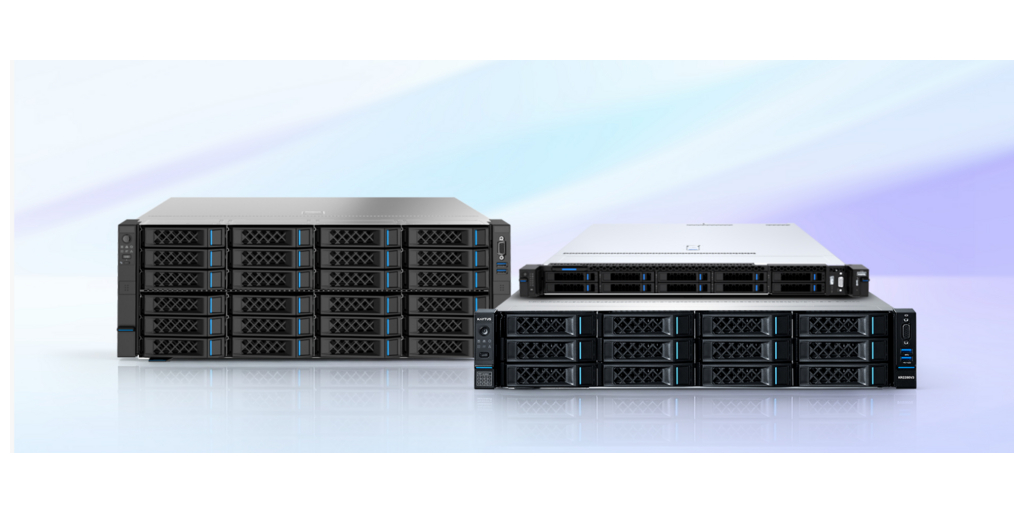



KAYTUS’s next-generation all-QLC flash solution delivers fully linear performance scaling for massive GPU clusters, while reducing TCO by 70%, enabling ultra-large-scale computing for the era of agentic AI.
SINGAPORE: At AI EXPO KOREA 2026, KAYTUS officially launched its All-QLC Flash Storage Solution, engineered to deliver high performance, massive scalability, and cost efficiency for 10,000-GPU clusters. The solution addresses data-delivery bottlenecks in ultra-large-scale AI training, helping maximize GPU resource utilization.
Based on the KR2280 and KR1180 server platforms, the solution is deeply integrated with industry-leading AI-native parallel file systems to eliminate data silos inherent in traditional tiered storage. Purpose-built for read-intensive AI workloads, it overcomes the horizontal scaling limitations of massive clusters. Verified test-data shows that, at exabyte-scale deployment, the solution delivers 10 TB/s aggregate bandwidth and 100 million IOPS. In addition, it reduces five-year TCO by 70% compared with traditional TLC-based solutions, accelerating model innovation for AI cloud providers and intelligent computing centers.
Limitations in Traditional AI Storage Architectures.
The explosive growth of AI is fundamentally transforming enterprise computing and storage requirements. Large-scale AI model training features highly read-intensive workloads that require tens of thousands of GPUs to concurrently access exabyte-scale datasets with sub-millisecond latency. Traditional storage architectures now face three major challenges:
- Separated Data Silos: Traditional ETL processes require data to be moved from object storage to parallel file systems before training, resulting in time-consuming physical data migration. IDC research indicates that data teams spend 81% of their time on data preparation, slowing business iteration.
- Workload and Media Mismatch: More than 90% of AI training involves high-frequency concurrent reads. In contrast, traditional TLC flash solutions provide excessive write endurance that is unnecessary for these read-intensive workloads, driving up procurement, space, and power costs for exabyte-scale clusters and resulting in inefficient resource utilization.
- Scalability Bottlenecks: Traditional file systems were not designed to handle the I/O burst workloads generated by 10,000-GPU clusters. As clusters scale, metadata lock contention and communication overhead introduce latency spikes and degraded overall performance.
KAYTUS Solution: All-QLC Flash Storage for Delivering High Performance, Scalability, and Cost Efficiency.
The next-generation KAYTUS All- QLC Flash Storage Server Solution is purpose-built to unlock the full potential of read-intensive AI training workloads. By tightly integrating flagship compute nodes with industry-leading AI-native parallel file systems, the solution harnesses advanced hardware–software co-design to deliver breakthrough performance, seamless scalability, and superior cost efficiency for ultra-large-scale AI computing environments.
Architectural Innovation: Overcoming AI Training Efficiency Bottlenecks.
The KAYTUS solution establishes a unified namespace with native multi-protocol access across file, object, and block storage. By leveraging high-capacity QLC flash pools and NVMe-oF fully shared interconnects, it redefines the unified data plane for AI storage, effectively eliminating the data silos inherent in traditional tiered architectures. Data can now flow on demand to GPU nodes without cross-system migration, enabling sub-millisecond access, and significantly improving AI training data retrieval efficiency.
- Hardware Optimization: Engineered for read-intensive workloads, the solution features a PCIe 5.0 direct-connect architecture that doubles single-node I/O bandwidth compared to the previous generation. Combined with NUMA-balanced optimization, it effectively eliminates internal throughput bottlenecks.
- Software Synergy: The solution integrates NFS over RDMA and native GPU Direct Storage technology, enabling direct data paths from QLC flash to GPU memory. By leveraging a disaggregated architecture that decouples protocol processing from storage states, it eliminates east-west traffic and achieves fully linear scaling of bandwidth and throughput, from petabyte to exabyte scale.
10,000-GPU Cluster Benchmarks: Exceptional Performance, Scalability, and Cost Efficiency
In benchmark testing in an exabyte-scale storage environment for a 10,000-GPU data center, the solution-powered by KR2280 and KR1180 nodes and optimized with industry-leading AI-native parallel file systems-demonstrated its capability to scale seamlessly to support computing clusters of up to 10,000 GPUs.
- Extreme Performance at Scale: The system delivers 10 TB/s sustained aggregate read bandwidth and 100 million random-read IOPS, enabling concurrent access for tens of thousands of GPUs. Performance scales linearly as additional nodes are added, while GPU utilization remains consistently above 95%, with no storage-side lock contention or queuing, effectively eliminating GPU data starvation.
- Superior Cost Efficiency: Compared with traditional TLC all-flash solutions, the solution reduces five-year TCO by 70%, cuts power and cooling costs by more than 75%, helping enterprises avoid overpaying for unnecessary extra write endurance.
Metric (1 EB Capacity) | TLC SSD Solution | QLC SSD Solution | Difference |
CAPEX | 1.0 | 0.39 | 65% ↓ |
Power Cost | 1.0 | 0.29 | 75% ↓ |
5-Year TCO | 1.0 | 0.36 | 70% ↓ |
(Note: Based on 15.36T TLC vs 61.44T QLC drive units) | |||
KAYTUS All-Flash Portfolio: From High Density to Massive Capacity.
KAYTUS offers a comprehensive QLC product portfolio supporting single-drive capacities of up to 122.88 TB.
- KR1180 (1U10) - High-Density Excellence: Delivers 1 PB of capacity and 140 GB/s bandwidth in a 1U chassis, featuring optimized air cooling and 18% latency improvement under GPU workloads.
- KR2280 (2U24) - Versatile Flagship: Supports 24 QLC drives and seven PCIe 5.0 slots. It is compatible with both Intel and AMD platforms and offers liquid-cooling options for high-efficiency data centers.
- KR4266 (4U60) - Big Data Massive Storage: Offers industry-leading physical density with up to 7 PB per unit, delivering 260 GB/s sequential read bandwidth and 20 million IOPS.
About KAYTUS
KAYTUS is a leading provider of AI infrastructure and liquid cooling solutions, delivering a diverse range of innovative, open, and eco-friendly products for cloud, AI, edge computing, and other emerging applications. With a customer-centric approach, KAYTUS is agile and responsive to user needs through its adaptable business model. Discover more at KAYTUS.com and follow us on LinkedIn and X
Fonte: Business Wire
Related news

Last News
RSA at Cybertech Europe 2024
Alaa Abdul Nabi, Vice President, Sales International at RSA presents the innovations the vendor brings to Cybertech as part of a passwordless vision for…
Italian Security Awards 2024: G11 Media honours the best of Italian cybersecurity
G11 Media's SecurityOpenLab magazine rewards excellence in cybersecurity: the best vendors based on user votes
How Austria is making its AI ecosystem grow
Always keeping an European perspective, Austria has developed a thriving AI ecosystem that now can attract talents and companies from other countries
Sparkle and Telsy test Quantum Key Distribution in practice
Successfully completing a Proof of Concept implementation in Athens, the two Italian companies prove that QKD can be easily implemented also in pre-existing…
Most read
Circle Reports First Quarter 2026 Results
Circle Internet Group, Inc. (NYSE: CRCL) today announced results for the first quarter of fiscal year 2026. Financial Highlights (Q1’26 vs. Q1’25) USDC…
Mercado Libre Kicks Off 2026 with Fastest Revenue Growth in Almost Four…
Mercado Libre (NASDAQ: MELI): NET REVENUE $8.8 BILLION ↑49% YoY Growth INCOME FROM OPERATIONS $611 MILLION 6.9% Margin NET INCOME $417 MILLION…
Tufinnovate 2026 Set to Explore the Ways Agentic AI is Reshaping Network…
#AI--Tufin, the leader in network security posture management, today announced new details for Tufinnovate 2026, its annual virtual user conference, including…
AI Agent Security Summit Returns to San Francisco to Address Emerging…
#AIAgentSecuritySummit--Zenity, the leading end-to-end security and governance platform for AI agents, today announced the agenda for the upcoming AI…
G11 Media Networks
InnovationOpenLab is a channel of BitCity, a newspaper registered at the court of Como ,
n. 21/2007 del
11/10/2007- Registration ROC n. 15698
G11 MEDIA S.R.L.
Registered office Via NUOVA VALASSINA, 4 22046 MERONE (CO) - P.IVA/C.F.03062910132
Como business register n. 03062910132 - REA n. 293834 CAPITALE SOCIALE Euro 30.000 i.v.